

We started Autoplay with a simple question:
What happens when software stops waiting for us?
The history of software has always been about efficiency. Better UI, clearer workflows, faster time-to-value. Today, most tools feel good enough. The interfaces have converged into a shared design language; dropdowns, sidebars, dashboards. The cognitive tax of using new software is lower than ever.
But the irony is that as software became easier to use, it also became easier to build. Every product now looks and feels the same. AI code copilots have made shipping new features fast, but the end result is more homogeneity, not less. Everyone has the same design patterns - the same onboarding tours, the same chatbot in the corner of the screen, the same PLG playbook to “drive adoption.”
The next leap won’t come from prettier UIs or more polished onboarding. It will come from software that knows what you’re trying to do, and helps you do it before you ask.
That’s where proactive agents come in.
The Problem with Today’s Co-Pilots
Most “AI copilots” today are reactive. They’re powerful, but fundamentally dumb in context. They wait for you to tell them what to do, and then they execute it. They don’t observe, reason, or infer.
Even when they connect to APIs or automate workflows, they rely on prompting, which assumes the user knows what they want, how to phrase it, and how the system works underneath. That’s a big assumption.
Prompting feels magical the first few times, but it’s still the human doing the cognitive heavy lifting. You need to know how to frame the problem, which tool can solve it, and what parameters matter. It’s like having a brilliant assistant who can do anything, but only if you give them perfect instructions.
And that’s the paradox: prompting rewards expertise. It benefits people who already understand the system. For everyone else, it’s a new kind of friction, a UX regression disguised as progress.
We’ve seen this before. The earliest software required deep expertise to operate: command lines, nested menus, rigid workflows. Then came the UI revolution, which abstracted complexity away. Prompting reverses that, and puts the work back on the human.
So if the co-pilot still needs the pilot to fly, have we really changed anything?
Why the Future Is Proactive
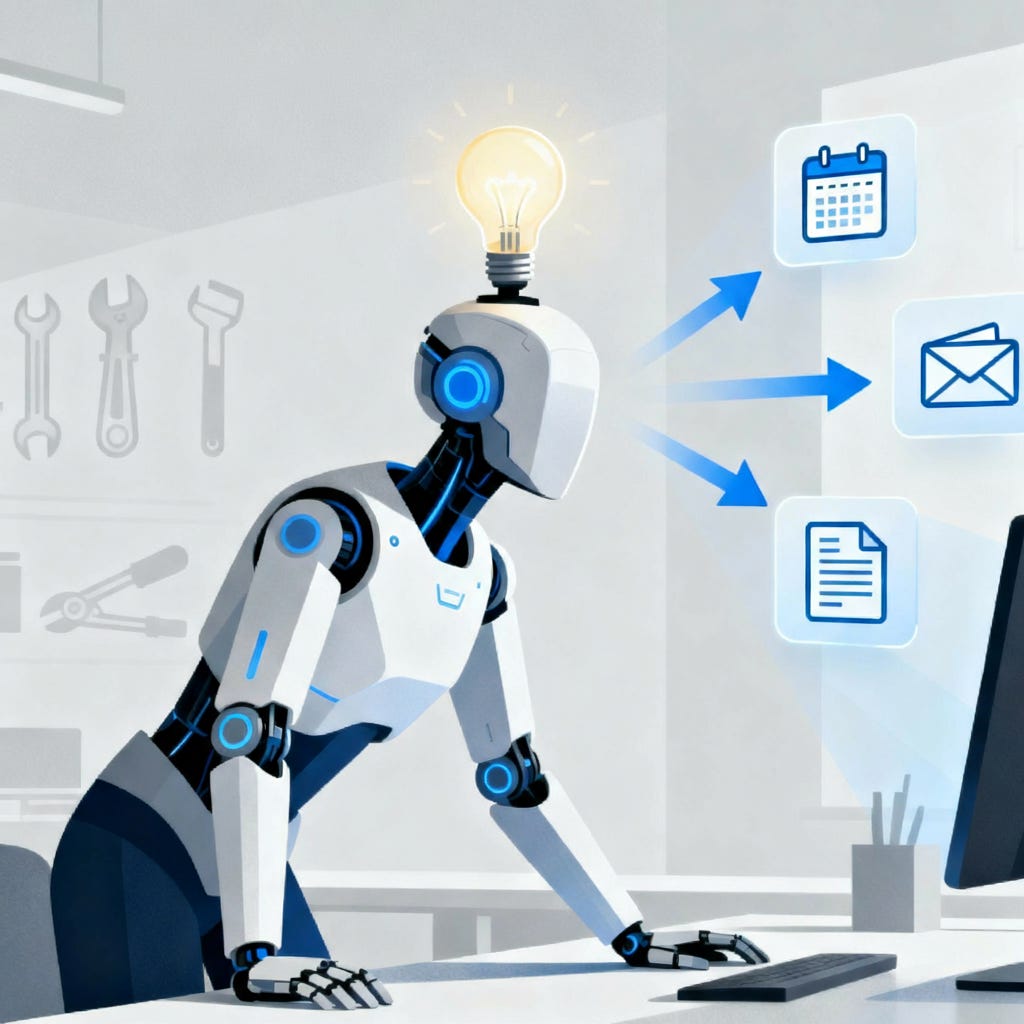
The next generation of co-pilots will be proactive, not reactive.
They’ll observe what you’re trying to do, anticipate where you’re going, and suggest or act accordingly, like a colleague who’s already one step ahead.
Instead of waiting for a prompt, they’ll watch your behavior, detect hesitation, and know when to step in. They’ll understand the difference between someone exploring a feature and someone clearly stuck. They’ll see that you’re creating a campaign, not just editing a field, and they’ll know the typical next three steps because they’ve seen thousands of users like you.
That’s the future of software adoption, productivity, and support.
But it requires solving several hard problems that the industry mostly ignores right now.
1. Context Is Still Fragmented
Every tool defines the world in its own terms: “projects,” “deals,” “campaigns,” “workflows.” None of them talk to each other meaningfully.
So when an AI connects across them, it’s moving data, not understanding it. It can describe events, but not interpret goals.
We built TERRA at Autoplay to solve exactly this. It’s a unified ontology - a common language that describes how software behaves, what users are trying to do, and what efficient workflows (“golden paths”) look like.
It lets our models reason across apps and industries. To know that creating a “new project” in Asana, a “campaign” in HubSpot, or a “workflow” in ActiveCampaign are the same conceptual action - initiation toward an outcome.
Without that kind of layer, AI will stay narrow and reactive; task executors rather than intelligent collaborators.
2. Trust Is the Bottleneck
You can’t automate what people don’t trust.
If an AI acts without explaining why, users will override it or turn it off. For proactive systems, transparency becomes non-negotiable.
That means clear reasoning: “I noticed most users drop off at this step, so I simplified it,” or “I pre-filled this field because it matches your past patterns.”
The UX of automation is no longer just usability, it’s legibility.
People don’t need perfection; they need confidence that what’s happening makes sense.
Trust isn’t built through accuracy alone. It’s built through explanation.
3. Autonomy Needs a Dial
Autonomy is a spectrum, not a switch.
Too little, and the agent is annoying constantly asking for permission.
Too much, and it’s dangerous, making changes you didn’t consent to.
Proactive systems will need adaptive autonomy. They’ll start in observe-and-suggest mode, then gradually earn the right to act as they prove reliability.
Just like a human teammate, trust expands through consistent, predictable behavior.
4. Real-Time Grounding
Large language models are great with text but blind to state. They don’t actually see what’s on screen, which buttons exist, what data is visible, or whether an action succeeded.
Without real-time grounding, AI actions are educated guesses.
Proactive agents need to perceive the same reality the user does – live product state, current workflow, system feedback. That’s why grounding in UI understanding (not just API data) is so critical.
Without it, AI remains a clever autocomplete for your clicks.
5. Privacy and Access
To anticipate intent, agents must observe behavior. But observation at scale raises obvious privacy concerns.
Companies want automation, but they can’t afford invisible data flows. Users want help, but they don’t want surveillance.
The solution isn’t less context, it’s smarter context.
Local inference. Edge processing. Synthetic abstractions. Systems that learn patterns without storing personal data.
If proactive AI is going to work, it has to earn access, through governance, transparency, and clear data boundaries.
Where It All Leads
For years, “good UX” meant minimizing clicks. The next era will be about minimizing cognition.
The most powerful software will feel like intuition, where help arrives exactly when you need it, without you asking.
That doesn’t mean removing control; it means removing unnecessary translation. Users shouldn’t have to think in software logic. The software should think in theirs.
That’s the vision behind Autoplay.
We’re building systems that can see intent, hesitation, and deviation, and connect them through a unified understanding of how software works.
Because the real bottleneck in AI isn’t model quality; it’s context.
And the real opportunity isn’t faster execution; it’s faster understanding.
We believe the future of copilots is proactive - systems that act before you ask, learn before you teach, and adapt before you notice.
When that happens, software won’t just feel easier.
It’ll feel like it finally understands you.